
HPC - High Performance Computing for Maximum Computing Performance
High Performance Computing (HPC) refers to high-performance computing infrastructures designed to process complex calculations, large datasets, and highly parallel workloads. Today, modern HPC environments are used in areas such as Artificial Intelligence (AI), Machine Learning, scientific research, simulations, Big Data analytics, and engineering. Depending on the application, supercomputers, HPC clusters, GPU computing platforms, high-performance storage, and specialized networking architectures are utilized.
As a specialist in HPC, AI, and GPU infrastructures, Happyware supports enterprises, research institutions, system integrators, and datacenters in the planning, configuration, and implementation of high-performance HPC solutions based on leading technologies from NVIDIA, AMD, Intel, Supermicro, GIGABYTE, and other manufacturers.
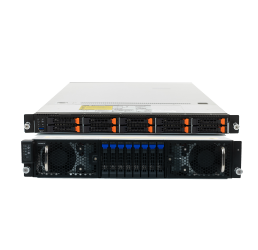
High Performance Computers
Configure and buy high-performance computers for HPC, e.g. for parallel computing with many cores per CPU!
High Performance Server or HPC Workstations for individual purposes for your own computer cluster.
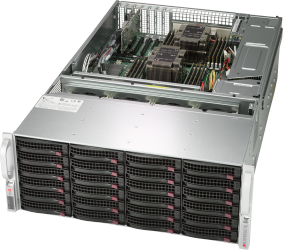
High Performance Storage
Buy HPC storage for your especially important data, e.g. as All Flash Storage with NVMe SSDs.
Storage for stable and scalable file systems e.g. LustreFS, GlusterFS or GFS Red Hat. Our HPC Engineers are happy to help you.

High Performance Networks
We offer high performance network equipment based on:
Buy High Performance Networking (HPN) Equipment online or let our HPC Engineers advise you!
Cluster Computing
Buy Server Cluster or Cluster Nodes for your High performance Cluster consisting of Server Hardware and Cluster Software
We deliver turnkey Cluster solutions including management software or complete Failover Cluster or just the Hardware for your Hadoop cluster or
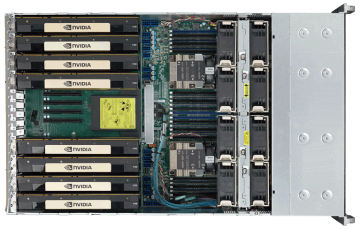
GPU Computing
High performance GPU computing solutions
We offer GPU server systems, GPU workstations and GPU clusters with NVidia GPUs.
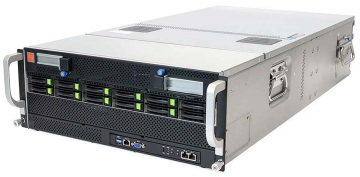
Artificial Intelligence
Our servers for Artificial Intelligence deliver maximum performance for complex applications and efficient data processing.
Rely on future technology - configure your AI server individually now or get advice!
Here you'll find High Performance Computing (HPC)


- 2U Rackmount Server, up to 280W cTDP
- Single Socket SP3, AMD EPYC 7003 Series processors
- 8x DIMM slots, up to 2TB RAM DDR4-3200MHz
- 4x 3.5 + 2x 2.5 inch hot-swap drive bays
- 1x dedicated management port
- 6x PCI-E Gen4 Expansion slots, 1x OCP 3.0
- 2x 1600W redundant power supplies (Platinum Level)
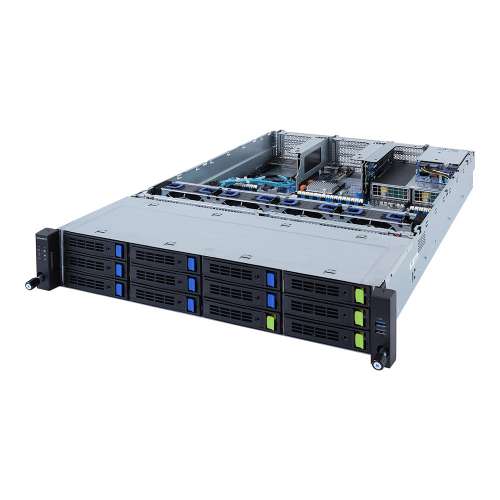
- 2U Rackmount Server, up to 270W cTDP
- Dual Socket P+, 3rd Gen Intel Xeon Scalable Processors
- 32x DIMM slots, up to 8TB RAM DDR4-3200MHz
- 12x 3.5 SATA/SAS/NVMe hot-swap drive bays
- 8x PCI-E 4.0 x16 Expansion slots and 2x OCP
- 2x 1GbE LAN ports via Intel I350-AM2
- 2x 1600W redundant power supplies (Platinum Level)


special highlight
32 DIMMs, bis zu 8TB RAM
- 2U Rackmount Server, up to 280W TDP
- Dual AMD EPYC™ 7003/7002 Series Processors
- 32x DIMM slots, up to 8TB RAM DDR4-3200MHz
- 12x 3.5 hot-swap Drive bays
- Dual 10GBase-T LAN ports via Intel® X710-AT2
- Integrated IPMI 2.0 + KVM with dedicated LAN
- 1600W Redundant Power supplies Titanium Level (96%+)

- 1U Rackmount Server, up to 225W TDP
- Dual Socket SP3, AMD EPYC 7003 Series CPU
- 32x DIMM slots, up to 8TB RAM DDR4-3200MHz
- 8x 2.5 SATA/SAS & 2x 2.5 NVMe hot-swap HDD/SSD bays
- 2x PCI-E 4.0 x16 expansion slots (FHHL)
- 2x 1GbE LAN ports via Intel® I350-AM2
- 2x 1200W redundant power supplies (Platinum Level)

- 2U Rackmount Server, 128 Cores
- Dual Socket SP5, AMD EPYC 9004 Series Processors
- 24x DIMM slots, up to 6TB RAM DDR5-4800MHz
- 10x 3.5 Inch drive bays (8x hot-swap, 2x fixed)
- 2x 10Gbit RJ45 LAN ports
- 4x PCI-E Gen5 low-profile expansion slots
- 2x 1000W Redundant Power Supplies (Titanium Level)

special highlight
32 DIMMs, up to 8TB
- 2U Rackmount Server, up to 270W cTDP
- 24x 2.5 SATA/SAS hot-swap drive bays, 2x 2.5 rear
- 8x PCI-E Gen4 x16 Expansion slots and 2x OCP
- 2x 1GbE LAN ports via Intel I350-AM2
- 2x 1600W redundant power supplies (Platinum Level)

special highlight
Ultra Server with 6x front hot-swap fans
DC Persistent Memory Slot
Up to 32 DIMM slots, 12TB RAM
- 2U Rackmount Server, up to 40 Cores 270W TDP
- Dual Socket P+ Intel® Xeon® Scalable Processors 3rd Gen.
- Up to 12TB RAM ECC DDR4 3200MHz
- 6x 2.5 Hot-swap hybrid NVMe/SATA/SAS
- 5 PCI-E 4.0 x8 FH, 10.5L
- 6x heavy duty Fans with optimal Fan speed control
- 1600W Redundant Titanium Level Power Supplies
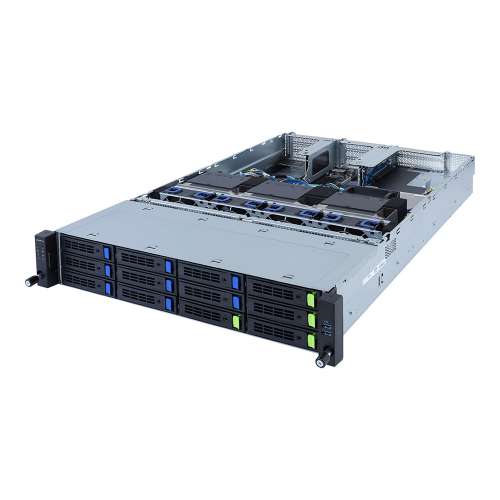
special highlight
Up to 3x double slot GPU cards
- 2U Rackmount Server, up to 270W CPU TDP
- Dual Socket P+, Intel Xeon Scalable Processor 3rd Gen
- 32x DIMM slots, up to 8TB RAM DDR4-3200MHz
- 12x 3.5 hot-swap SATA/SAS/NVMe drive bays
- 5x PCI-E Gen4 x16 Expansion slots
- Support up to 3x dual slot GPU cards (Dual Slot)
- 2x 2400W redundant power supplies (Platinum Level)

special highlight
NVIDIA ARM HPC Developer Kit
- 2U Rackmount Server, up to 128 Cores
- Single Socket LGA-4926, Ampere Altra Processor
- 16x DIMM slots, up to 4TB RAM DDR4-3200MHz
- 4x 3.5/2.5 Inch SATA hot-swap drive bays
- 7x PCI-E Gen4 Expansion slots and 2x M.2
- 2x 1GbE LAN ports via Intel I350-AM2
- 2x 1600W redundant power supplies (Platinum Level)

special highlight
Supports up to 3x double slot GPU cards, NVIDIA Certified
- 2U Rackmount Server, 64-Cores and up to 225W TDP
- Dual Socket SP3, AMD EPYC 7003 Series processor
- 32x DIMM slots, up to 8TB RAM DDR4-3200MHz
- 12x 3.5 SAS/SATA hot-swap drive bays
- 5x PCI-E 4.0 x16 slots and 2x OCP Mezzanine
- 3x double slot GPU cards, NVIDIA Ready Server
- 2x 2000W redundant power supplies (Platinum Level)

- 2U Rackmount Server, up to 270W cTDP
- Dual Socket P+, 3rd Gen Intel Xeon Scalable CPU
- 32x DIMM slots, up to 8TB RAM DDR4-3200MHz
- 26x 2.5 hot-swap drive bays
- 8x PCI-E Gen4 x16/x8 Expansion slots and 2x OCP
- Supports Dual ROM technology, Intel C621A Express Chipset
- 2x 1600W redundant power supplies (Platinum Level)
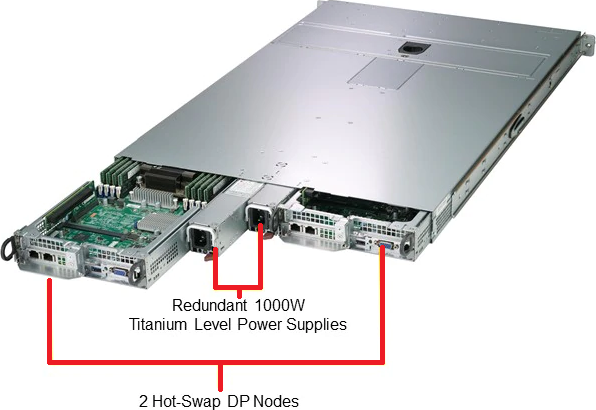
- 1U Rack Server, 145W TDP
- Dual Intel Xeon Scalable CPU, 2nd Gen.
- Up to 4TB RAM, DDR4-2933MHz ECC
- Network support via SIOM
- 1000W Redundant power supplies (Titanium Level)

special highlight
40 x 2.5" SATA/SAS hot-swap SSD Slots on 2U
- 2U Rackmount Server, up to 240W cTDP
- Single Socket SP3, AMD EPYC 7003 Series Processors (Milan)
- 16x DIMM slots, up to 4TB RAM DDR4-3200MHz
- 40x 2.5 SATA/SAS hot-swap SSD bays, 8x 2.5 Internal
- 2x PCI-E Gen4 x16 expansion slots and 2x OCP
- 2x 1GbE LAN ports via Intel® I350-AM2
- 2x 1200W redundant power supplies (Platinum Level)

special highlight
Up to 8TB RAM, 32 DIMM slots
Option for 3 Double-Slot GPUs
- 2U Rackmount Server, up to 40 Cores 270W TDP
- Dual Socket P+ Intel® Xeon Scalable Processors 3rd Gen.
- Up to 12TB RAM, 3200MHz ECC DDR4
- 6x 2.5 Hot-swap Hybrid Drive bays
- 4 PCI-E 4.0 x16 slots with GPU optional
- 6 heavy duty Hot-swap Fans with optimal speed control
- 2000W Redundant AC Power Supplies

- 2U Rackmount Server, up to 225W TDP
- Dual Socket SP3, AMD EPYC 7003 CPU series
- 32x DIMM slots, up to 8TB RAM DDR4-3200MHz
- 26x 2.5 SAS/SATA hot-swap drive bays
- 8x PCI-E 4.0 x16 slots and 2x OCP Mezzanine
- Onboard 12Gb/s SAS expander
- 2x 1600W redundant power supplies (Platinum Level)
Do you need help?
Simply call us or use our inquiry form.
What Is HPC - High Performance Computing?
High Performance Computing (HPC) refers to the use of high-performance computing infrastructures for processing complex calculations, large volumes of data, and highly parallel workloads. Unlike traditional server environments, HPC combines multiple compute nodes, high-speed networking, and high-performance storage systems to deliver maximum computational performance.
Typical application areas include:
- Artificial Intelligence (AI) and Machine Learning
- Scientific simulations
- Big Data analytics
- Research and development
- Rendering and visualization
When Does High Performance Computing Make Sense?
Not every application requires an HPC infrastructure. High Performance Computing becomes particularly relevant when traditional server architectures reach their limits in terms of compute performance, memory bandwidth, or scalability.
Typical HPC use cases include:
- Training large AI and machine learning models
- Scientific simulations and calculations
- Computational Fluid Dynamics (CFD)
- Finite Element Analysis (FEA)
- Genomics and bioinformatics
- Digital Twins
The more complex the workloads and the larger the datasets become, the greater the benefits organizations gain from an HPC infrastructure specifically designed for their requirements.
HPC Infrastructure – Servers, Storage, and Networking as an Integrated System
A modern HPC infrastructure consists of compute nodes, storage systems, and a high-performance network fabric. While compute nodes provide the actual processing power, high-performance storage systems ensure the rapid delivery of large data volumes. Individual resources are interconnected through low-latency high-speed networks such as InfiniBand or high-speed Ethernet. As a result, the overall performance of an HPC system is determined not only by processors or GPUs, but also significantly by memory bandwidth, network throughput, and the scalability of the entire infrastructure.
Happyware supports the design of balanced HPC infrastructures. This includes high-performance compute nodes, GPU systems, high-performance storage, high-speed networking, as well as appropriate cooling, power delivery, and service concepts. Depending on the workload, NVIDIA or AMD GPU platforms are deployed for AI and deep learning, while AMD EPYC and Intel Xeon processors are selected based on requirements for core count, memory bandwidth, I/O capacity, and software environment.
High-Performance Computers
High-Performance Computers are high-performance computing systems used either as standalone HPC systems or as components of larger HPC infrastructures. They provide extensive CPU, memory, and accelerator resources for compute-intensive applications and are utilized in areas such as scientific simulations, engineering calculations, data analytics, and AI workloads.
High Performance Storage
High Performance Storage provides the data throughput required for HPC applications. Modern NVMe and parallel storage systems enable high IOPS rates, low latency, and fast data access even when handling extremely large datasets.
Particularly in AI training, simulations, and data-intensive analytics, storage architecture often becomes the determining factor for overall performance. In practice, even powerful GPU systems can become bottlenecked if training data or simulation datasets cannot be delivered quickly enough.
High Performance Network
A powerful High Performance Network is essential for communication between compute nodes, storage systems, and GPU clusters. Technologies such as InfiniBand and high-speed Ethernet reduce latency and increase data throughput across the HPC infrastructure.
The appropriate networking technology depends heavily on the workload. While many AI workloads can be efficiently operated on modern Ethernet networks, highly parallelized HPC applications often benefit from ultra-low-latency InfiniBand architectures.
Cluster Computing
Cluster Computing describes the fundamental architectural principle behind many HPC environments. Multiple interconnected compute nodes work together to process complex workloads and distribute computations across numerous systems in parallel. This significantly increases computational performance, availability, and scalability. Depending on the application, cluster servers, cluster nodes, or virtualization clusters are deployed.
HPC Clusters
An HPC cluster is the practical implementation of cluster computing in High Performance Computing. Multiple compute nodes are connected through a high-speed network and operate as a unified computing system. By processing large computational tasks in parallel, applications can run significantly faster than on a single server.
In practice, however, achievable cluster performance depends not only on the number of compute nodes. Network architecture, memory bandwidth, and storage connectivity significantly influence how efficiently workloads can be distributed and processed across the cluster. HPC clusters form the foundation for scientific simulations, AI training, engineering applications, and Big Data analytics.
GPU Computing
GPU Computing utilizes specialized graphics processors to accelerate highly parallel computations. Compared to traditional CPU-based systems, GPU systems can process significantly more operations simultaneously.
For AI, deep learning, and HPC projects, however, overall performance is not determined solely by the number of GPUs. CPU resources, memory, storage systems, and network architecture must be designed to continuously supply data to the GPUs and prevent performance bottlenecks.
Particularly for Artificial Intelligence, deep learning, scientific simulations, and data-intensive analytics, GPU servers and GPU clusters offer significant performance advantages over purely CPU-based architectures.
HPC for Artificial Intelligence and Machine Learning
Artificial Intelligence is now one of the primary drivers of High Performance Computing. Training large language models, neural networks, and complex AI applications requires enormous compute capacity, high memory bandwidth, and fast network connectivity.
Modern HPC infrastructures provide the foundation for:
- Generative AI
- Large Language Models (LLMs)
- Deep Learning
- Computer Vision
- AI Inference
By utilizing powerful AI servers, HPC clusters, and high-speed networks, training times can be significantly reduced and AI projects can be efficiently scaled. Are you planning an AI project or looking to expand existing resources?
Talk to our specialists. We analyze your requirements and develop a customized HPC solution. Contact us now for a no-obligation consultation!
Why High Performance Computing Is Becoming Increasingly Important
The demands placed on modern IT infrastructures continue to grow. Increasing data volumes, complex simulations, Artificial Intelligence, and data-intensive analytics require significantly more computing power than traditional server environments can provide. High Performance Computing enables organizations to process complex workloads efficiently, shorten development cycles, and make data-driven decisions more quickly. In addition, High Performance Computing provides the foundation for innovation in areas such as machine learning, deep learning, digital twins, Big Data analytics, and scientific research.
Every HPC environment has unique requirements regarding compute performance, storage, networking, and scalability. Happyware designs and implements customized HPC solutions that are optimally aligned with existing IT infrastructures and future requirements.
Through the successful implementation of numerous HPC projects, Happyware has developed extensive expertise in the planning, integration, and scaling of high-performance computing environments.
Which High Performance Computing Solution Is Right?
The optimal HPC infrastructure always depends on the specific workloads, scalability requirements, and operating models. While some applications benefit from powerful standalone servers, others require scalable HPC clusters or GPU-based architectures.
| Requirement | Recommended Solution |
|---|---|
| Scientific simulations | HPC Cluster |
| Artificial Intelligence | GPU Computing / GPU Cluster |
| Deep Learning | GPU Computing / GPU Cluster |
| Big Data Analytics | High Performance Storage & HPC Cluster |
| Research & Development | Supercomputer |
| Scalable Datacenters | HPC Cluster with High Performance Network |
Every HPC environment places individual requirements on compute performance, storage, networking, and scalability. We are happy to support you with the technical evaluation of your requirements and jointly develop the right HPC solution for your project.
Happyware as a Solution Provider for High Performance Computing
High Performance Computing is about more than powerful servers. Unlike hardware-only suppliers, Happyware views HPC infrastructures as integrated systems and provides vendor-independent consulting. Servers, storage, networking, cooling, and power delivery are planned together and aligned with specific applications, workloads, and scalability objectives. The result is a powerful and sustainably scalable HPC environment rather than isolated standalone solutions.
Since 1999, Happyware has supported enterprises, research institutions, and datacenters in implementing high-performance HPC, AI, and GPU infrastructures. From supercomputers and HPC clusters to GPU computing, high-performance storage, and high-speed networking, you receive a complete end-to-end solution from a single source.
- Workload-focused consulting instead of standard configurations
- End-to-end project support from planning to operation
- Vendor-independent consulting
- Flexible purchasing, rental, and financing models
- GPU computing for AI and deep learning from NVIDIA and AMD
- HPC clusters and cluster nodes
- Supercomputers for simulation and research
- NVMe, parallel, and scale-out storage solutions
- Rack, cooling, and power infrastructure concepts for HPC datacenters
- InfiniBand and high-speed Ethernet networks
- ISO 9001 and ISO 14001 certified processes
Together, we develop an HPC infrastructure precisely aligned with your applications, workloads, and growth objectives. Contact us for an individual consultation.
FAQ
What Are the Most Common Challenges in HPC Projects?
The most common challenges include network bottlenecks, insufficient storage performance, improperly sized GPU resources, and unbalanced infrastructure design. Particularly in HPC clusters, high network latency or limited bandwidth can significantly restrict scalability. Technologies such as InfiniBand or high-speed Ethernet with 100, 200, or 400 Gb/s reduce communication times between compute nodes and improve the efficiency of parallel workloads.
When Is a Single HPC Server Sufficient and When Is a Cluster Required?
A single HPC server is sufficient as long as the application can run within the available CPU, memory, and GPU resources of a single system. An HPC cluster becomes necessary when workloads must scale across multiple compute nodes in parallel, such as MPI-based simulations, distributed AI training, or when several terabytes of memory or dozens of GPUs are required.
What Role Do GPUs Play in High Performance Computing?
GPUs enable the parallel processing of large data volumes and significantly accelerate AI training, deep learning, scientific computing, and data-intensive analytics compared to traditional CPU-based systems.
How Do I Find the Right HPC Solution?
The optimal HPC infrastructure depends on the specific applications, data volumes, scalability requirements, and growth objectives. Happyware supports the selection and planning of customized HPC solutions for AI, simulation, research, Big Data, and other HPC applications. We are happy to assist you in evaluating your technical requirements and developing the ideal HPC infrastructure for your project.