
Failover Cluster – High Availability (HA) for Servers, Hyper-V and Enterprise Workloads
In modern IT infrastructures, high availability is no longer a luxury but a business-critical requirement. When a single server fails, applications, databases, or virtual machines may become unavailable — with potentially significant impacts on productivity and revenue. A failover cluster ensures that this does not happen: if one cluster node fails, another server in the cluster automatically takes over operations.
Secure your high availability now and avoid costly downtime — contact us for a non-binding initial consultation!
Here you'll find (HA) Failover Cluster


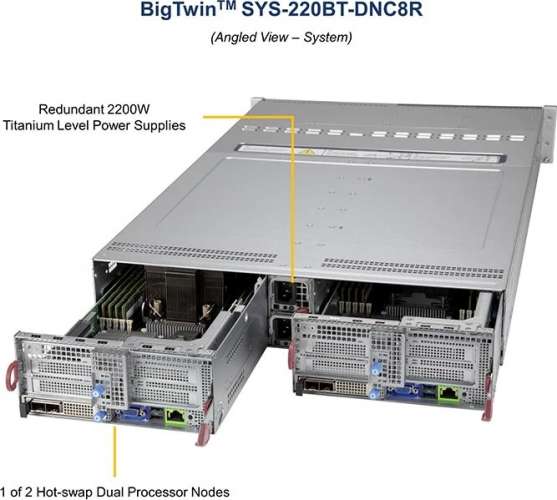
- 2U Rack Server, up to 270W TDP
- Dual Socket P+, 3rd Gen Intel® Xeon® Scalable processors
- 20x DIMM slots (16 DRAM + 4 PMem), up to 6TB RAM DDR4-3200MHz
- 12x 2.5 hot-swap NVMe/SATA/SAS Drive bays (12x 2.5 NVMe hybrid)
- 1x PCI-E 4.0 x16 and 1x PCI-E 4.0 x8 (LP) slots
- Network connectivity via AIOM (OCP 3.0 compliant)
- 2x 2200W redundante Power supplies (Titanium Level)
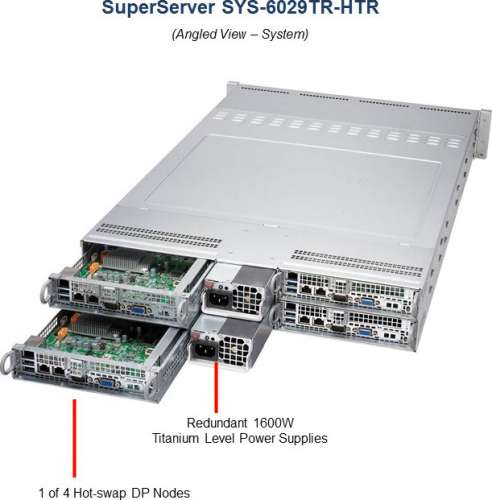
- 2U Rackmount Server, up to 140W TDP
- Dual Socket P, 2nd Gen Intel Xeon Scalable Processors
- 4x hot-pluggable Nodes
- 8x DIMM slots, up to 2TB RAM DDR4-2933MHz ECC
- 3x 3.5 hot-swap drive bays, 2x SATA DOM
- 1x PCI-E 3.0 x16 slot
- 2x 1600W redundant power supplies (Titanium Level 96%)
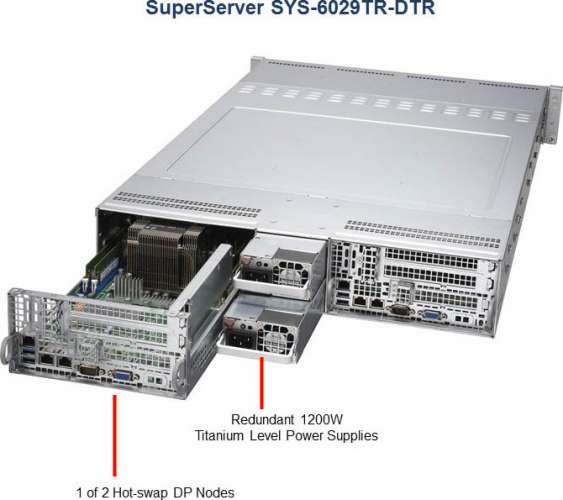
- 2U Rackmount Server, up to 140W TDP
- 2x Hot-pluggable nodes
- Dual Socket P, 2nd Gen Intel Xeon Scalable Processors
- 8x DIMM slots, up to 2TB RAM DDR4-2933MHz ECC
- 6x 3.5 Hot-swap SATA3 drive bays
- 2x PCI-E 3.0 x8 slots
- 2x 1200W redundant power supplies (Titanium Level)
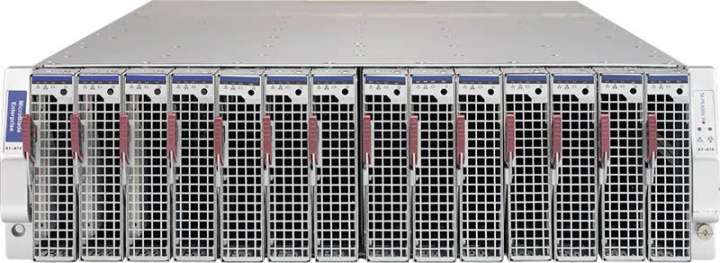
special highlight
14 Server blades on 3U
- 3HE Rack MicroBlade Enclosure
- Up to 14 Hot-swap server blades
- Up to 2 Hot-swap 10G ethernet switches
- 1 Hot-swap management module optional
- 4x Huge cooling fans
- 2000W Redundant power supplies
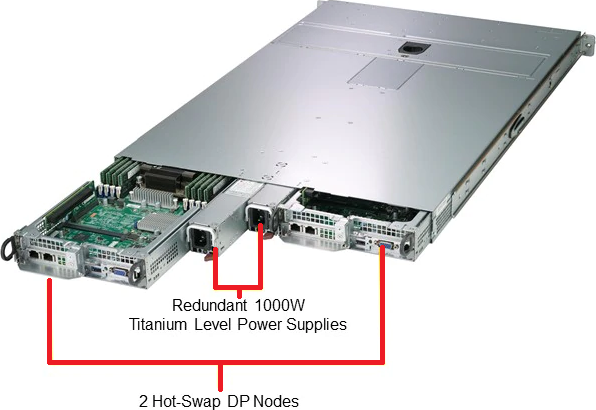
- 1U Rack Server, 145W TDP
- Dual Intel Xeon Scalable CPU, 2nd Gen.
- Up to 4TB RAM, DDR4-2933MHz ECC
- Network support via SIOM
- 1000W Redundant power supplies (Titanium Level)

- 4U Rack SuperBlade Enclosure
- Up to 14 blade servers
- Up to 2x 10GbE switches
- 1 Management module
- 4x 2200W Power supplies (Titanium Level)
special highlight
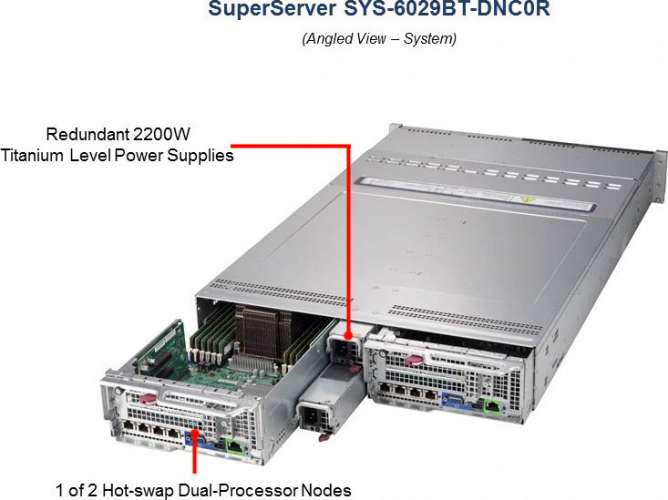
Integrated SAS HBA
- 2U Rackmount Server, up to 205W TDP
- Dual Socket P, 2nd Gen Intel Xeon Scalable Processors
- 24x DIMM slots, up to 6TB RAM DDR4-2933MHz ECC
- 2x hot-pluggable nodes
- 6x 3.5 hot-swap drive bays
- 2x PCI-E 3.0 x8, 1x PCI-E 3.0 x16 & 1x SIOM card support
- 2x 2200W redundant power supplies (Titanium Level)
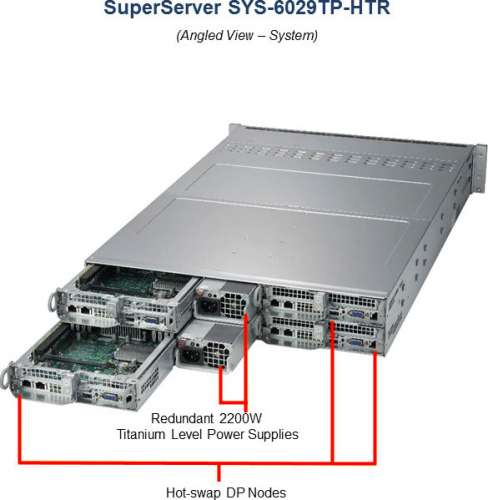
- 2U Rackmount Server, up to 165W TDP
- Dual Socket P, 2nd Gen Intel Xeon Scalable Processors
- 16x DIMM slots, up to 4TB RAM DDR4-2933MHz ECC
- 4x hot-pluggable nodes
- 3x 3.5 hot-swap SATA drive bays
- 2x PCI-E 3.0 x16 slots and 1x SIOM card support
- 2x 2200W redundant power supplies (Titanium Level)

- 8U Rack SuperBlade Enclosure
- Up to 20 blade servers
- Up to 2x 10GbE switches
- 1 Management module
- 4x 2200W Power supplies (Titanium Level)

- 2U 4-Node Rack Server, up to 165W TDP
- Dual Socket P, 2nd Gen Intel Xeon Scalable Processors
- 16x DIMM slots, up to 4TB RAM DDR4-2933MHz ECC
- 6x 2.5 Inch hot-swap SATA3 drive bays
- 2x PCI-E 3.0 x16 slots and 1x SIOM card support
- Flexible Networking support via SIOM & dedicated IPMI 2.0
- 2x 2200W redundant power supplies (Titanium Level)

- 6U Rackmount SuperBlade Enclosure
- Up to 14/28 Blade Servers
- Up to 2x Ethernet Switch Modules
- 1x Management module
- Up to 8x cooling fans
- Up to 8x 2200W hot-plug Power supplies (Titanium Level)

- 2U Rack 4 Node Server, up to 165W TDP
- Dual Socket P, 2nd Gen Intel Xeon Scalable Processors
- 16x DIMM slots, up to 4TB RAM DDR4-2933MHz ECC
- 6x 2.5 Inch hot-swap SAS/SATA drive bays
- 2x PCI-E 3.0 x16 slots and 1x SIOM card support
- 1x RJ45 IPMI LAN port, Network support via SIOM
- 2x 2200W redundant power supplies (Titanium Level)

- 2U Rackmount Server, up to 165W TDP
- Dual Socket P, 2nd Gen Intel Xeon Scalable Processors
- 16x DIMM slots, up to 4TB RAM DDR4-2933MHz ECC
- 4x hot-pluggable nodes
- 3x 3.5 hot-swap SAS/SATA drive bays
- 2x PCI-E 3.0 x16 slots and 1x SIOM card support
- 2x 2200W redundant power supplies (Titanium Level)

- 4U Rackmount Server, up to 165W TDP
- 4x Hot-pluggable nodes
- Dual Socket P, 2nd Gen Intel Xeon Scalable Processors
- 12x DIMM slots, up to 3TB RAM DDR4-2933MHz ECC
- 8x 3.5 hot-swap SATA3 drive bays
- 2x PCI-E 3.0 x16 slots
- 4x 1200W redundant power supplies (Titanium Level)

special highlight
4 hot-pluggable Nodes on 2U
- 2U Rackmount Server, up to 165W TDP
- Dual Socket P, 2nd Gen Intel Xeon Scalable Processors
- 16x DIMM slots, up to 4TB RAM DDR4-2933MHz ECC
- 4 hot-pluggable Nodes
- 6x 2.5 Inch hot-swap SAS/SATA drive bays
- 2x PCI-E 3.0 x16 slots and 1 SIOM card support
- 2x 2200W redundant power supply (Titanium Level)
Do you need help?
Simply call us or use our inquiry form.
What is a Failover Cluster?
A failover cluster is a group of at least two independent servers, known as cluster nodes, that work together to increase the availability of services and applications. These nodes are connected through a network and access shared storage.
If one of the active servers fails unexpectedly, the system detects the failure and another available node automatically takes over its tasks within seconds. This process, known as “failover,” is ideally not noticeable to the end user.
Disaster Recovery & Business Continuity with Failover Clustering
A failover cluster is a central building block for high availability – but it does not replace a complete disaster recovery concept. While failover clustering ensures that services continue running automatically if a server node fails, disaster recovery protects against site-wide outages caused by power failures, natural disasters, or major hardware failures.
Modern enterprise architectures therefore combine highly available clusters with backup and replication solutions. Especially in Microsoft environments, Windows Server Failover Clustering can be effectively combined with Azure services to implement hybrid scenarios. This allows virtual machines or SQL databases to be additionally replicated to the cloud.
A well-designed failover system helps to:
- Keep critical applications available
- Minimize downtime
- Meet service level agreements (SLAs)
- Secure business processes
Especially in enterprise environments where many different workloads run simultaneously, a combination of failover clustering and disaster recovery is essential to build a resilient IT infrastructure in the data center.
Architecture & Technical Components of a Failover System
A powerful failover cluster is based on a clearly structured architecture. The most important components include:
- Cluster nodes: At least two physical servers, often configured identically
- Central storage: SAN, iSCSI or Storage Spaces Direct (S2D)
- Quorum: Determines cluster majority
- Cluster Shared Volumes (CSV): Shared disks for parallel access
- Network: Redundant connections for heartbeat and storage traffic
The installation and configuration of a Windows Server Failover Cluster or a Linux server cluster typically follows several steps:
- Install roles
- Run validation tests
- Create the cluster
- Integrate storage
- Configure roles
In many enterprise environments, configuration is performed using PowerShell to automate and standardize processes.
Cluster Management with the Failover Cluster Manager
The entire installation, configuration, and ongoing management of a Windows Server Failover Cluster is controlled through a central and powerful tool: the Failover Cluster Manager. This graphical console is the primary interface for administrators to monitor and manage the health and status of their cluster.
With the Failover Cluster Manager, you can perform tasks such as:
- Creation & validation
- Configure roles & services
- Resource management
- Live monitoring
- Manual failover testing
For automation and scripting purposes, configuration can alternatively be performed via PowerShell, which provides deeper control over every aspect of failover clustering.
Virtualization Use Case: Failover Clusters for Hyper-V
A failover cluster for Hyper-V forms the backbone of modern and resilient data centers. Instead of running a single virtual machine on a single physical server – creating a single point of failure – the cluster distributes workloads across multiple hosts and ensures redundancy between VMs.
The advantages of a Hyper-V cluster include:
- Automatic high availability: If a physical host server (a cluster node) fails unexpectedly, the failover cluster immediately detects the failure. The virtual machines running on that host are automatically restarted on another functioning node in the cluster.
- Planned maintenance without downtime (Live Migration): Using live migration, all running VMs can be moved to another node during operation without noticeable interruption for the end user. After maintenance is completed, the VMs can be moved back without downtime.
This combination of automatic restart during failures and planned migrations without downtime makes the Hyper-V failover cluster an essential technology for any enterprise virtualization environment.
Failover Clusters in Microsoft Environments
Windows Server Failover Clustering is particularly widespread. This technology enables various highly available roles and workloads, including:
- File servers
- SQL Server failover clusters
- Hyper-V clusters for virtual machines
- Highly available enterprise applications
- Infrastructure services such as DHCP or print services
Installation and configuration can be performed using the Failover Cluster Manager or via PowerShell. In many projects, large parts of the installation and configuration process are automated – especially in larger enterprise environments.
Requirements for Setting Up Failover Clusters
Some technical prerequisites are required for a stable cluster environment:
- An installed domain controller
- Properly configured networks
- Suitable shared or S2D storage structures
- Adequately sized servers
- Solid networking knowledge
A highlight of modern Microsoft environments is the S2D failover cluster (Storage Spaces Direct). In this setup, no external storage is required because the local drives of the cluster nodes are combined into a highly available storage pool. This reduces infrastructure complexity while increasing scalability and performance.
For databases, the SQL Server Failover Cluster is a proven solution to keep mission-critical databases available. If one server fails, another node automatically takes over – without manual intervention.
Hybrid scenarios with Microsoft Azure are also possible, allowing on-premises clusters to be flexibly combined with cloud infrastructures. This makes failover clustering a key enterprise technology for modern, scalable IT architectures.
Failover Clusters – Enterprise Architectures for Demanding IT Environments
As a specialist for data center and enterprise solutions, Happyware supports you in selecting suitable servers, storage architectures, and network components – vendor-independent and tailored to your requirements. Whether classic failover clusters, Storage Spaces Direct (S2D), or scalable Hyper-V clusters: you receive an infrastructure precisely aligned with your workloads.
- Custom cluster architectures
- High-quality, tested server systems
- Support with installation & configuration
- Scalable solutions
- Flexible purchase, rental, or leasing models
With a professionally designed failover cluster, you ensure that your systems remain available even during failures. Our specialists support you from server selection to installation and configuration – get expert advice now!