
Buy Uninterruptible power supply (UPS Battery) Systems and Automatic Transfer Switch (ATS) from HAPPYWARE
The larger a company, the more comprehensive it’s IT, and where large amounts of data are digitally stored or transported, a sudden power outage can have devastating consequences. To avoid possible operational and/or financial consequences, it is better to protect your power supply with an uninterruptable power supply Battery from HAPPYWARE.
Or you can opt for an Automatic Transfer Switch (ATS) which switches the power supply from two independent input sources to a single output source as soon as one source fails or falls below the tolerance limit. You can use a transfer switch to increase the availability and redundancy of rack servers that are connected to a single power source.
You prevent with a powerful UPS system or a switch your server from going out in the event of a power failure. Learn more about the concept of uninterruptable power supply and how you can effectively protect your servers with a UPS power supply from HAPPYWARE.
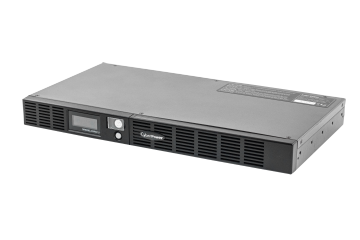
Here you'll find UPS Battery


- IEC C13 x 4 + 2x IEC Jumpers, Up to 1000W | 1500VA
- Line-interactive UPS Topology
- Sinewave Output
- SmartConnect Port + SmartSlot, AVR, LCD
- Surge and Noise suppression
- Multifunction LCD status and control console
- Cloud-enabled monitoring

- 1U NetShelter ATS, Power Distribution Unit
- IEC C13 x 8 / C19 x 1 OUT / C20 x 2 IN
- 16A Rated Current, up to 230 Vac
- 50/60Hz Network Frequency, Horizontal
- Intelligent & cyber-secure
- LCES1 Mini NMC3 Network Management Card
- Redundant power to single-corded equipment

- IEC C13 x 4 + 2x IEC Jumpers, Up to 500W | 750VA
- Line-interactive UPS Topology
- Sine wave Output
- SmartConnect Port + SmartSlot, AVR, LCD
- Surge and Noise suppression
- Multifunction LCD status and control console
- Cloud-based remote power monitoring

- IEC C13 x 4 + 2x IEC Jumpers, Up to 900W | 1500VA
- Sine Wave Output and temperature-compensated charging
- Line Interactive Topology
- Built in PowerChute Network Shutdown
- Multifunction LCD Display Screen
- Surge Protection and Noise Suppression
- Energy Meter and Green Premium Standard

- IEC C13 x 8 + IEC C19 x 1, up to 1980W | 2200VA
- Line Interactive Topology
- SmartConnect Port+SmartSlot, AVR and LCD
- Sine Wave Output
- Built in PowerChute Business Edition
- Cloud-based remote power monitoring
- Green mode and Energy Meter

- 1U Netshelter ATS, Power Distribution Unit
- IEC C13 x 12 / C14 IN
- 10A Rated Current, up to 230 Vac
- 50/60Hz Network Frequency, Horizontal
- Intelligent & cyber-secure
- LCES1 Mini NMC3 Network Management Card
- Redundant power to single-corded equipment

- IEC C13x 8 + IEC C19x 2 + 2x IEC Jumpers, Up to 1980W | 2200VA
- Double Conversion On-Line Topology
- SmartSlot w/ Rail Kit and Scalable Runtime
- Sine Wave Output
- Embedded network management card with environmental monitoring
- Dual input and 1:1, 3:1 input hard-wire
- Built-in energy meter and Green Premium Standard

- IEC C13 x 8 + IEC C19 x 2, Up to 2700W | 3000VA
- Sine-Wave Output
- Network Management Card
- Double Conversion Online Topology
- Wide input voltage window
- Extended Runtime
- Green mode and Energy Meter

- IEC C13 x 8 + IEC C19 x 2, Up to 2700W | 3000VA
- Sine Wave Output
- Double conversion online Topology
- Multifunction LCD status and control console
- SmartSlot, Extended Runtime, with Rail Kit
- Surge Protection and Filtering
- Built-in Energy Meter and Green Premium Standard

- IEC C13 x 4 + IEC 2x Jumpers, up to 280W | 450VA
- 1U Rackmount/Tower UPS
- Line Interactive Topology
- Pure Sine Wave Output
- LED status display with on line
- Surge and Data Line Protection
- Hot-swap batteries and Network Grade Protection

- IEC C13 x 8 + IEC C19 x 1, Up to 2700W | 3000VA
- SmartConnect Port + Smart Slot
- Line interactive Topology
- Pure Sine Wave Output
- Cloud-based remote power monitoring
- Multifunction LCD status and control console
- Green Premium Product with Energy Meter

- IEC C13x 8 + IEC C19x 1 + 2x IEC Jumpers, Up to 2700W | 3000VA
- Line Interactive UPS Topology
- Sine Wave Output
- Preinstalled Network management card 2
- Surge Protection and Noise Suppression
- Scalable runtime and Network manageable
- Built in Energy Meter and Green Premium Standard

- IEC C13 x 4 + 2x IEC Jumpers, Up to 1000W | 1500VA
- Multifunction LCD Display Screen
- Network Management Card 2
- Built in PowerChute Network Shutdown
- Surge Protection
- Sine wave output and temperature-compensated charging
- Green mode and Energy Meter

- IEC C13x 6 + IEC C19x 4 + 2x IEC Jumpers, Up to 6000W | 6000VA
- Double Conversion On-Line Topology
- Network Card + SmartSlot w/ Rail Kit and Scalable Runtime
- Sine Wave Output
- Embedded network management card with environmental monitoring
- Dual input and 1:1, 3:1 input hard-wire
- Built-in energy meter and Green Premium Standard

- IEC C13x 8 + C19x 2 + 2x IEC Jumpers, Up to 1980W | 2200VA
- Line-Interactive Topology
- SmartSlot, Extended-Runtime and Short-depth
- Sine Wave Output
- Integrated network management card with environment monitoring
- Boost and Trim Automatic Voltage Regulation (AVR)
- Built-in energy meter and Green Premium Standard
Do you need help?
Simply call us or use our inquiry form.
What Are UPS Systems?
The abbreviation “UPS” stands for “Uninterruptible Power Supply.” Such a system serves as a backup power source in the event of power outages, helping to prevent data loss in server environments.
UPS systems are installed between the power source and the consumer. As soon as the energy supply from the grid fails, the UPS takes over – depending on the type, either instantly or with a short transfer time – to continue powering the servers. A UPS is not intended as a permanent power source, but rather to bridge a critical period.
Typical scenarios include:
- Safe shutdownThe UPS remains active until servers are properly shut down and all data is secured.
- Seamless transitionThe UPS remains active until the conventional power supply is restored.
UPS systems vary in size and performance. Power is supplied via rechargeable batteries. Depending on the UPS type, rectifiers and inverters can also compensate for voltage spikes and frequency fluctuations in the power grid.
Depending on the type, UPS systems protect against the following power disturbances:
- Power outages (temporary or complete)
- Overvoltage
- Undervoltage
- Frequency fluctuations
- Harmonics in the electrical circuit
UPS Systems – Preventing Common Sources of Damage
In everyday business operations, various disruptions can occur that require the use of a UPS system. Below are some of the most common causes:
- Environmental factors
Severe weather conditions such as thunderstorms can cause voltage spikes or surges in the power grid. A UPS system helps absorb these spikes and protects your IT infrastructure. - Operational conditions
Everyday electrical devices, from fluorescent lighting to copiers, can affect voltage stability. Harmonics and voltage distortions may damage IT systems over time. A UPS system reliably minimizes these risks. - Industrial environments
If data centers or server infrastructures operate in industrial areas, they may be exposed to frequency fluctuations or voltage spikes caused by heavy machinery. With a UPS system, these irregularities will not disrupt your IT operations. - Human error
Whether due to maintenance mistakes or accidental disconnection, UPS systems ensure that your systems remain operational even during a complete power failure until normal conditions are restored.
UPS Systems in Three Classes: Types and Protection Levels
When choosing a UPS system, it is important to consider not only the likelihood of a power failure but also the type of disturbance and how sensitive your IT infrastructure is to such irregularities.
According to DIN EN 62040-3, UPS systems are divided into three categories:
- Class 1: VFI
(Voltage and Frequency Independent from mains supply) Ideal for sensitive IT environments, with no transfer time as power is continuously supplied via the inverter. Protects against outages, under- and overvoltage, and grid fluctuations. This highest level of protection is ideal for mission-critical systems such as a failover cluster. - Class 2: VI
(Voltage Independent from mains supply) Provides solid protection for networks and computer systems with moderate tolerance levels, with a transfer time typically between 2–10 ms. Protects against outages and voltage fluctuations. - Class 3: VFD
(Voltage and Frequency Dependent from mains supply) Basic protection for systems without special requirements, with transfer times of up to 10 ms. Primarily protects against outages but offers limited protection against other disturbances. Not recommended for sensitive IT systems.
Maintaining UPS Systems – Ensuring Continuous Data Protection
To ensure UPS systems function reliably in emergencies, battery maintenance is essential. Battery lifespan typically ranges from 3 to 5 years, depending on usage and environmental conditions.
This product overview features a selection of uninterruptible power supplies (UPS) and Automatic Transfer Switches (ATS). If you are looking for a broader range of uninterruptible power supply (UPS) systems from various manufacturers, you will find our complete portfolio in the Uninterruptible Power Supply (UPS) category of our Server Hardware shop.
HAPPYWARE – Your Partner for Technical Expertise
Would you like to learn more about modern UPS systems and their role in server infrastructures? At HAPPYWARE, we are happy to support you with expert advice. Contact us and discover your options.