
Datacenter Servers for Modern Datacenters
Datacenter servers are deployed in datacenters to reliably process large volumes of applications, data, and workloads. Depending on the requirements, they are used for cloud computing, virtualization, storage, artificial intelligence, or high performance computing. High-density servers in particular have become established in modern datacenters. As specialized datacenter servers, they enable high compute density per rack unit and help organizations utilize available resources more efficiently without compromising performance or scalability.
The planning and implementation of high-performance datacenter server infrastructures has been part of Happyware’s core business for many years. We support enterprises, datacenters, cloud providers, and system integrators in the selection, server configuration, and implementation of customized server solutions tailored to applications, workloads, and future scalability requirements.
Together, we develop vendor-independent solutions based on leading platforms from GIGABYTE, Supermicro, NVIDIA, Tyan, and other manufacturers – aligned with your requirements, workloads, and growth objectives.
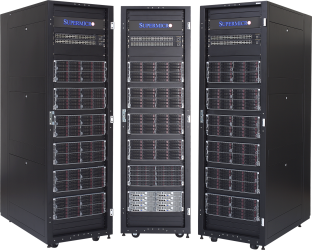
Here you'll find Datacentre-optimised servers



special highlight
32 DIMMs, up to 8TB RAM
- 2U Rackmount Server, up to 270W TDP
- Dual Socket P+, 3rd Gen Intel Xeon Scalable Processors
- 32x DIMM slots, up to 12TB RAM DDR4-3200MHz
- 24x 2.5 Inch Hot-swap hybrid NVMe/SATA/SAS drive bays
- 2x PCI-E 4.0 x16 and 6x PCI-E 4.0 x8 slots
- 4x Heavy duty fans with optimal fan speed control
- 2x 1600W redundant power supplies (Titanium Level)

- 1U Rackmount Server, up to 225W TDP
- Dual Socket SP3, AMD EPYC 7003 Series CPU
- 32x DIMM slots, up to 8TB RAM DDR4-3200MHz
- 8x 2.5 SATA/SAS & 2x 2.5 NVMe hot-swap HDD/SSD bays
- 2x PCI-E 4.0 x16 expansion slots (FHHL)
- 2x 1GbE LAN ports via Intel® I350-AM2
- 2x 1200W redundant power supplies (Platinum Level)

- 1U Rackmount Server, up to 70W cTDP
- Single Socket FCBGA-2518, Intel Xeon D-2173IT Processor
- 4x DIMM slots, up to 512GB RAM DDR4-2666MHz ECC
- 2x 10GbE RJ45, 2x 10G SFP+ LAN ports
- 2x 2.5 Inch fixed drive bays
- 4x PCI-E 3.0 x8 Expansion slots
- 2x 400W redundant Power Supplies (Platinum Level)

- 4U Rackmount Server, 270W cTDP
- Single Socket P+, 3rd Gen Intel Xeon Scalable Processor
- 8x DIMM slots, up to 2TB RAM DDR4-3200MHz
- 24x 3.5 hot-swap drive bays
- up to 2x 10GbE RJ45 LAN ports
- up to 7x PCIe full height, full-length Slots
- 2x 1200W redundant Power Supplies with PMBus (Titanium Level)

- 1U Rackmount Server, up to 105W cTDP
- Single Socket FCBGA-2518, Intel Xeon D-2177NT Processor
- 4x DIMM slots, up to 512GB RAM DDR4-2666MHz ECC
- 9x 1GbE RJ45, 2x 10GbE RJ45, 2x 10G SFP+ LAN ports
- 2x 2.5 Inch hot-swap drive bays
- 2x PCI-E 3.0 x16 Expansion slots
- 1x 500W Single Power Supply (Platinum Level)

special highlight
32 DIMMs, up to 8TB
- 2U Rackmount Server, up to 270W cTDP
- 24x 2.5 SATA/SAS hot-swap drive bays, 2x 2.5 rear
- 8x PCI-E Gen4 x16 Expansion slots and 2x OCP
- 2x 1GbE LAN ports via Intel I350-AM2
- 2x 1600W redundant power supplies (Platinum Level)

- 1U Rackmount Server, up to 350W TDP
- Dual Socket E, 4th Generation Intel Xeon Scalable CPU
- 32x DIMM slots, up to 8TB RAM DDR5-4800MHz
- 4x 3.5/2.5 + 4x 2.5 Inch hot-swap drive bays
- 2x 1GbE RJ45 LAN ports
- 2x PCI-E 5.0 x16 Expansion slots, 2x OCP 3.0
- 2x 1600W redundant power supplies (Platinum Level)

special highlight
24x 3.5" on 2U thanks to side access
- 2U Rackmount Server, up to 200W cTDP
- Dual Socket SP3, AMD EPYC 7003 Series Processor
- 16x DIMM slots, up to 4TB RAM DDR4-3200MHz
- 26x hot-swap drive bays
- Onboard 12Gb/s SAS expander
- 6x PCI-E 4.0 x16 low-profile expansion slots
- 2x 1300W redundant Power Supplies 80 PLUS (Platinum Level)

special highlight
Supports Intel® Optane™ DCPMM
- 4U Rackmount Server, up to 145W cTDP
- Dual Socket P, 2nd Gen Intel Xeon Scalable Processor
- 16x DIMM slots, up to 2TB RAM DDR4-2933MHz
- 36x 3.5 SATA/SAS hot-swap drive bays + 2x 2.5 SATA
- 4x PCI-E 3.0 x16 slots and 1x Mezzanine card
- 2x 10Gb/s SFP+ LAN and 2x 1Gb/s RJ45 LAN ports
- 2x 1200W redundant Power supplies (Platinum Level)
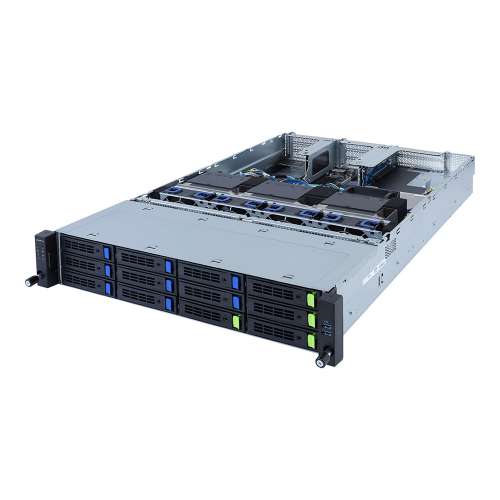
special highlight
Up to 3x double slot GPU cards
- 2U Rackmount Server, up to 270W CPU TDP
- Dual Socket P+, Intel Xeon Scalable Processor 3rd Gen
- 32x DIMM slots, up to 8TB RAM DDR4-3200MHz
- 12x 3.5 hot-swap SATA/SAS/NVMe drive bays
- 5x PCI-E Gen4 x16 Expansion slots
- Support up to 3x dual slot GPU cards (Dual Slot)
- 2x 2400W redundant power supplies (Platinum Level)

- 1U Rackmount Server, up to 350W TDP
- Dual Socket E, 4th Gen Intel Xeon Scalable Processors
- 32x DIMM slots, up to 8TB RAM DDR5-4800MHz
- 8x 2.5 Inch hot-swap drive bays
- 3x PCI-E 5.0 x16 Expansion Slots
- 1x AIOM slot, 1x BMC LAN port
- 2x 1200W redundant Power supplies (Titanium Level)

- 1U Rackmount Server, up to 350W TDP
- Dual Socket E, 4th Generation Intel Xeon Scalable CPU
- 32x DIMM slots, up to 8TB RAM DDR5-4800MHz
- 4x 3.5/2.5 + 4x 2.5 Inch hot-swap drive bays
- 2x 1GbE RJ45 LAN ports
- 2x PCI-E 5.0 x16 Expansion slots, 2x OCP 3.0
- 2x 1600W redundant power supplies (Platinum Level)

special highlight
NVIDIA ARM HPC Developer Kit
- 2U Rackmount Server, up to 128 Cores
- Single Socket LGA-4926, Ampere Altra Processor
- 16x DIMM slots, up to 4TB RAM DDR4-3200MHz
- 4x 3.5/2.5 Inch SATA hot-swap drive bays
- 7x PCI-E Gen4 Expansion slots and 2x M.2
- 2x 1GbE LAN ports via Intel I350-AM2
- 2x 1600W redundant power supplies (Platinum Level)

special highlight
Supports up to 3x double slot GPU cards, NVIDIA Certified
- 2U Rackmount Server, 64-Cores and up to 225W TDP
- Dual Socket SP3, AMD EPYC 7003 Series processor
- 32x DIMM slots, up to 8TB RAM DDR4-3200MHz
- 12x 3.5 SAS/SATA hot-swap drive bays
- 5x PCI-E 4.0 x16 slots and 2x OCP Mezzanine
- 3x double slot GPU cards, NVIDIA Ready Server
- 2x 2000W redundant power supplies (Platinum Level)

- 2U Rackmount Server, up to 270W cTDP
- Dual Socket P+, 3rd Gen Intel Xeon Scalable CPU
- 32x DIMM slots, up to 8TB RAM DDR4-3200MHz
- 26x 2.5 hot-swap drive bays
- 8x PCI-E Gen4 x16/x8 Expansion slots and 2x OCP
- Supports Dual ROM technology, Intel C621A Express Chipset
- 2x 1600W redundant power supplies (Platinum Level)
Do you need help?
Simply call us or use our inquiry form.
What Are Datacenter Servers?
Datacenter servers are servers specifically designed for continuous operation in datacenters. Unlike traditional standalone server installations, they are engineered for deployment in highly scalable infrastructures where compute performance, network bandwidth, cooling capacity, and available rack space must be utilized efficiently. Therefore, high compute density, automation, energy efficiency, and the centralized management of large server environments are key priorities.
Typical use cases for modern datacenter servers include:
- Virtualization and Private Cloud
- Public cloud and hosting platforms
- Kubernetes and container environments
- High Performance Computing (HPC)
- Artificial Intelligence (AI)
- Databases and analytics
- Storage and backup infrastructures
Depending on the application, selected rack servers, multi-node systems, GPU servers, or specialized high-density servers from our portfolio are deployed.
Advantages of Modern Datacenter Servers
Modern datacenter servers offer far more than raw compute performance. In addition to CPU and GPU resources, they provide powerful networking and storage connectivity, centralized management capabilities specifically designed for datacenter environments, and highly available server architectures.
The key advantages include:
- High node density
- High rack density
- Cloud and Kubernetes infrastructures
- Multi-node architectures
- GPU farms
- Optimized power consumption per rack
- Optimized energy efficiency in accordance with applicable guidelines
- High availability through redundant components
- Centralized management and automation
High-Density Servers for Maximum Compute Performance per Rack
High-density servers are a specialized form of modern datacenter server. They are designed to provide the highest possible number of CPU cores, GPUs, memory, and storage resources per rack unit (U) while efficiently optimizing power consumption, cooling requirements, and operating costs.
Particularly in datacenters, colocation environments, and cloud infrastructures, rack space, power delivery, and cooling capacity are limited resources. High-density servers enable high compute density per rack while efficiently utilizing available power and cooling resources without requiring additional floor space.
The key advantages include:
- High compute performance per rack unit
- Optimized energy efficiency
- Lower infrastructure costs
- Improved utilization of existing datacenter space
- High scalability for growing workloads
High-density servers offer significant advantages over traditional server architectures, particularly in HPC clusters, cloud platforms, AI infrastructures, and virtualization environments. In addition to conventional rack systems, blade servers are frequently deployed in high-density datacenter environments. Their modular design enables particularly high compute density, centralized management, and efficient utilization of power and networking resources within modern datacenter infrastructures.
From practical experience, we know that modern high-density platforms often enable the consolidation of existing server environments. This can improve rack utilization while reducing energy, cooling, and operational costs. Would you like to find out whether modernizing your infrastructure is economically worthwhile? Contact us – we will analyze your existing environment.
When Are High-Density Servers the Right Choice?
High-density servers are particularly suitable for organizations and datacenters that need to deliver maximum compute performance within limited rack space.
Typical use cases include:
- Cloud Computing and hosting platforms
- Kubernetes clusters
- HPC environments
- AI and machine learning projects
- Virtualization platforms
- Colocation datacenters
The greater the requirements for scalability and compute performance per rack unit, the more high-density servers demonstrate their advantages.
Datacenter Servers for Cloud, Kubernetes, and Container Platforms
Modern datacenter servers form the foundation of cloud environments, Kubernetes clusters, and containerized applications. Thanks to their high compute density, fast network connectivity, and support for containerized workloads, these servers are ideally suited for Kubernetes, cloud, and DevOps environments.
The combination of powerful processors, high-speed NVMe storage, and high-performance networking enables the efficient deployment of virtual machines, containers, and microservices.
Datacenter Servers for AI, HPC, and GPU Computing
Applications such as Artificial Intelligence, deep learning, big data analytics, GPU Computing, and High Performance Computing place significant demands on compute performance, memory bandwidth, and network architecture. In practice, overall performance is not determined solely by CPU performance.
Equally important are:
- Memory capacity and memory bandwidth
- NVMe storage performance
- Network bandwidth
- Cooling and power concepts
- GPU acceleration
Typical Challenges in Datacenter Server Projects
Selecting powerful datacenter servers is only one aspect of a successful datacenter strategy.
The most common challenges include:
- Insufficient network bandwidth or excessive network latency
- Underestimated cooling requirements
- Lack of scalability
- Undersized storage systems
- High power consumption in GPU and HPC environments
Particularly in AI, HPC, and cloud projects, the interaction between servers, storage, networking, cooling, and power delivery determines the actual overall performance of the infrastructure.
Energy Efficiency and Cooling of Modern Datacenter Servers
As compute density increases, power consumption and cooling become increasingly important. At the same time, requirements for energy efficiency, sustainability, and energy consumption reporting are becoming more significant, as datacenters are increasingly subject to regulatory requirements and reporting obligations. Modern datacenter infrastructures are therefore evaluated not only on performance but also on criteria such as energy efficiency, cooling concepts, and long-term operating costs.
Modern datacenter servers support, among other things:
- Optimized airflow concepts
- Redundant fan and power supply architectures
- OCP-compliant server platforms
- Direct Liquid Cooling (DLC)
- Liquid Cooling Datacenter
This makes it possible to reduce operating costs while achieving higher performance densities.
Management and Automation of Datacenter Servers
Operating large server environments requires powerful management and automation tools.
Modern datacenter servers support:
- Remote management via IPMI and Redfish APIs
- Firmware and BIOS management
- Monitoring and telemetry
- Automated provisioning
- OpenStack integration
- Kubernetes and cloud orchestration
This enables administrators to efficiently manage and operate even complex infrastructures.
Why Choose Datacenter Servers from Happyware?
The selection of a datacenter server should not be based solely on technical specifications. When planning modern datacenter server environments, we consider not only individual server models but the entire infrastructure. Depending on the application, we analyze your project requirements for performance, storage capacity, network architecture, cooling, and future scalability. This results in solutions that not only work today but can also grow with your organization’s future requirements. Particularly for high-density servers, HPC clusters, and cloud platforms, this holistic approach helps avoid future bottlenecks and costly upgrades.
For mission-critical applications and regulated industries, we also support organizations in designing highly available failover clusters. This helps minimize downtime and ensure the high availability of critical applications and data.
Our customers can choose from a range of warranty packages as standard. In addition to various customer support services, our Gold and Platinum packages include additional datacenter services. If you have selected one of these packages and issues arise with your datacenter servers, repairs are performed directly on-site and in a timely manner by technicians commissioned by us.
Our services include:
- Individually configured datacenter servers
- High-density servers for maximum rack utilization
- Vendor-independent consulting
- Efficient project support
- Assistance with implementation and integration
- Customized on-site services as required
- Flexible leasing, rental, and financing models
- Extended service and warranty options
- ISO 9001 and ISO 14001 certified processes
Take advantage of datacenter-optimized Supermicro servers or GIGABYTE servers for scalable cloud, virtualization, AI, or HPC infrastructures within your organization. Whether you require a single datacenter server, a scalable cloud platform, or a complex high-density infrastructure, we will work with you to develop the right solution for your requirements.
We are, of course, happy to provide additional information about datacenter-optimized servers from GIGABYTE or Supermicro upon request. We support you in the individual configuration of your data servers.
Frequently Asked Questions About Datacenter Servers
When Is a High-Density Server Worthwhile?
High-density servers are particularly worthwhile when maximum compute performance must be delivered within limited rack space. Typical applications include cloud platforms, HPC clusters, AI infrastructures, and colocation datacenters.
Which Manufacturers Offer Datacenter Servers?
Established manufacturers of datacenter servers include Supermicro, GIGABYTE, Tyan, HPE, and Dell Technologies. The selection should always be based on the planned workloads and infrastructure requirements.
What Role Does Cooling Play in High-Density Servers?
As compute density increases, thermal load within the rack also rises. This is why OCP-based concepts, energy-efficient components, and increasingly liquid cooling solutions play an important role in the reliable operation of modern high-density servers compared to standardized air cooling.