
Enterprise Computing Solutions for Modern Datacenter Infrastructures
Enterprise computing encompasses the planning, deployment, and continuous development of high-performance IT infrastructures for businesses, research institutions, datacenters, and other organizations with business- or research-critical applications. Depending on the requirements, enterprise servers, datacenter servers, high-availability solutions, and modern cooling technologies are deployed. For many years, Happyware has supported businesses, datacenters, hosting providers, cloud providers, research institutions, and IT service providers in planning, modernizing, and expanding high-performance enterprise computing environments.
We support projects ranging from traditional server infrastructures to highly scalable datacenter environments with demanding requirements for compute density, energy efficiency, availability, and future growth.
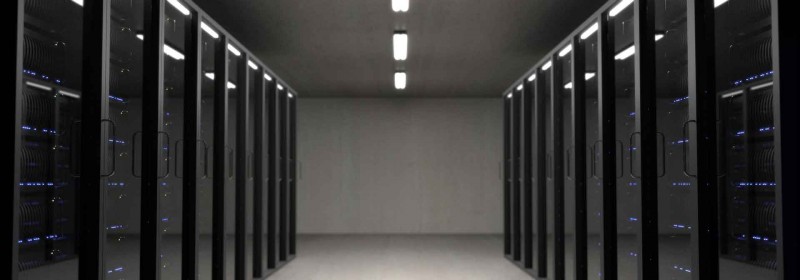
OCP Data Center
OCP Server for your Data Center - find out more now and discover all the benefits, possible applications and technical details.
Make the right infrastructure decisions - with sound OCP Server Expertise at your side.
Liquid Cooling Data Center
Liquid Cooling for Data Centers: Up to 40% lower cooling energy costs!
Server Immersion Cooling, Liquid Cooled Server: Talk to our experts about the potential for your data center!
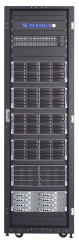
Enterprise Server
Enterprise servers are available in different versions, such as high performance servers, high end servers or enterprise storage servers.
Happyware offers customised server solutions for companies that guarantee maximum performance and scalability for the growth of your company.
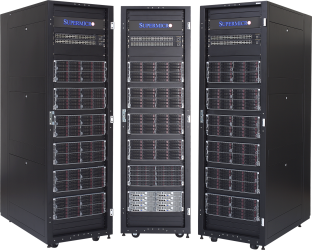
Datacenter Server
Do you need a high-density rack server for your data centre? We will be happy to help you configure your server systems.
Buy high density servers here from the experts for servers and storage in data centres with maximum packing density.
Virtualisation
Configure virtualization servers for various platforms, e.g. for VMware ESXi, Microsoft Hyper-V, Citrix XenServer, Linux KVM
At Happyware, you will find your individual virtualization solution! You will be able to utilize your server hardware better!
(HA) Failover Cluster
HA clusters increase the reliability of your servers and services.
HAPPYWARE offers tailor-made failover cluster solutions based either on Microsoft or Linux.
Here you'll find Datacenter & Enterprise

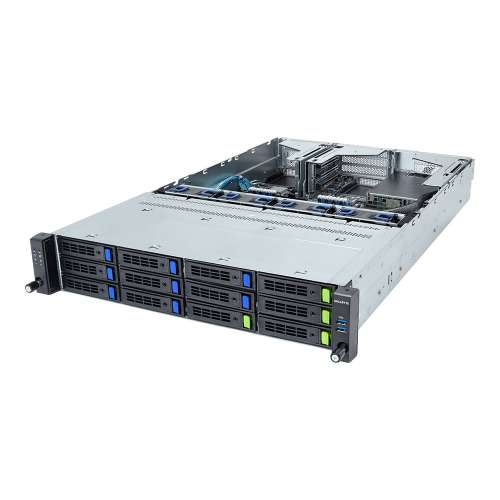
- 2U Rackmount Server, up to 60 Cores
- Single Socket E, 4th Gen Intel Xeon Scalable CPU
- 16x DIMM slots, up to 4TB RAM DDR5-4800MHz
- 12x 3.5/2.5 Inch hot-swap drive bays
- 1x 1GbE RJ45 LAN port
- 2x PCI-E 5.0 x16 Expansion slots, 2x OCP 3.0
- 2x 1300W Redundant Power Supplies (Titanium Level)


- 2U Rackmount Server, up to 500W cTDP
- Single Socket SP5, AMD EPYC 9005/9004 Series CPU
- 12x DIMM slots, up to 3TB RAM DDR5-6000MHz
- 2x 2.5 Inch NVMe/SATA/SAS hot-swap drive bays
- 2x 10GbE RJ45 LAN ports
- 7x PCI-E Gen5 Expansion Slots (4x GPUs, 2 NICs, 1 x DPUs)
- 4x 2000W redundant power supplies (Titanium Level)
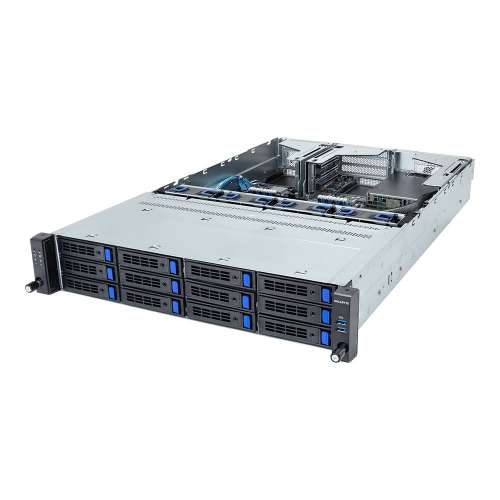
- 2U Rackmount Server, up to 60 Cores
- Single Socket E, 4th Gen Intel Xeon Scalable CPU
- 16x DIMM slots, up to 4TB RAM DDR5-4800MHz
- 12x 3.5/2.5 Inch hot-swap drive bays
- 1x 1GbE RJ45 LAN port
- 3x PCI-E 5.0 x16 Expansion slots, 2x OCP 3.0
- 2x 2400W redundant power supplies (Platinum Level)

- Rack/Full-Tower Server, up to 350W CPU TDP
- Dual Socket E, 5th/4th Gen Intel Xeon Scalable Processors
- 16x DIMM slots, up to 4TB RAM DDR5-4400MHz
- 8x 3.5 hot-swap NVMe/SATA/SAS drive bays
- 7x PCI-E 5.0 x16 Expansion slots
- 2x 10GbE LAN ports, up to 4x GPUs
- 2x 2000W redundant Power Supplies (Titanium Level)
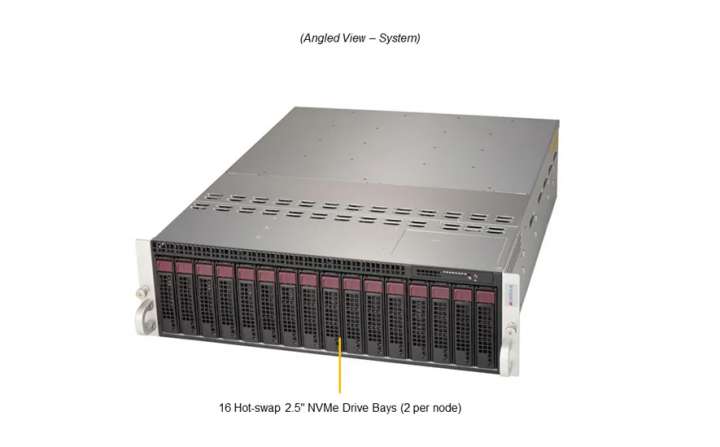
- 3U Rackmount Server, up to 170W CPU TDP
- Single Socket AM5, AMD EPYC 4004 Series Processor
- 4x DIMM slots, up to 192GB RAM DDR5-5200MHz
- 2x 3.5 Inch hot-swap drive bays
- 2x PCI-E (1x LP, 1x MicroLP) Expansion slots
- 1x single width GPU, 1x M.2
- 2x 2200W redundant Power Supplies (Titanium Level)
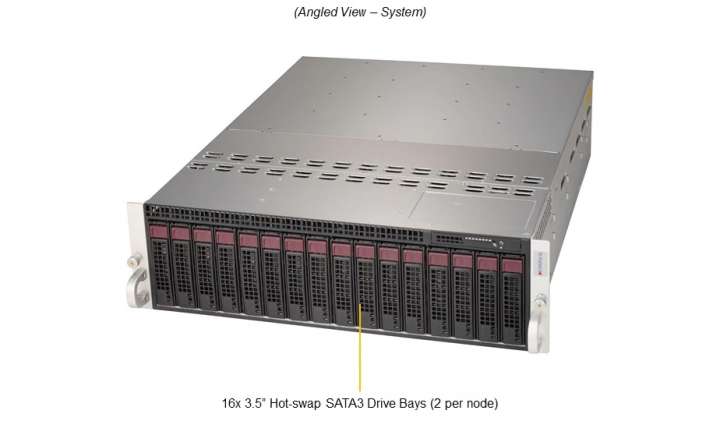
- 3U Rackmount Server, up to 95W TDP
- Single Socket H5, Intel Xeon E-2300 Series Processor
- 4x DIMM slots, up to 512GB RAM DDR4-3200MHz
- 8x Node Architecture
- 2x 3.5 hot-swap NVMe/SATA/SAS drive bays
- 1x PCI-E 4.0 x16 LP and 1x PCI-E 4.0 x8 MLP slots
- 2x 2000W redundant power supplies (Titanium Level)

- 1U Rackmount Server, up to 95W TDP
- Single Socket V, Intel E-2400/Pentium Processor
- 4x DIMM slots, up to 128GB RAM DDR5-4400MHz
- 4x 3.5 Inch hot-swap drive bays
- 2x PCI-E Expansion slots
- 2x 1GbE RJ45 LAN ports
- 1x 600W redundant power supply (Titanium Level)

- 5U Rackmount Server, up to 385W cTDP
- Dual Socket E, 5th/4th Gen Intel Xeon Scalable Processors
- 32x DIMM slots, up to 8TB RAM DDR5-4400MHz
- 16x 2.5 hot-swap drive bays
- 13x PCI-E 5.0 x16 Expansion slots
- 2x 10GbE RJ45 LAN ports
- 4x 2700W redundant power supplies (Titanium Level)
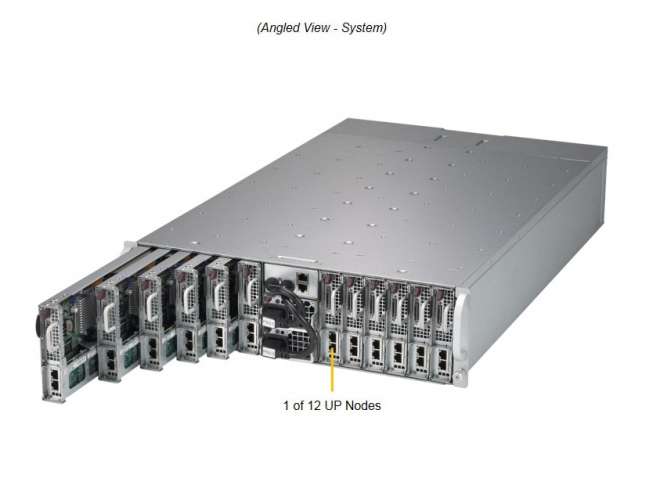
- 3U Rackmount Server, up to 80W TDP
- Single Socket H4, Intel Xeon E3-1200, 12x Hot-pluggable nodes
- 4x DIMM slots, up to 64GB RAM UDIMM DDR4-2400MHz
- 4x 2.5/3.5 Inch hot-swap drive bays
- 2x 1GbE RJ45 LAN ports
- 1x Centralized IPMI Management, 4x heavy-duty fans
- 2x 2000W redundant power supplies (Titanium Level)

- 1U Rackmount Server, up to 95W TDP
- Single Socket V, Intel E-2400/Pentium Processor
- 4x DIMM slots, up to 128GB RAM DDR5-4400MHz
- 4x 3.5 Inch hot-swap drive bays
- 3x PCI-E Expansion slots
- 2x 1GbE RJ45 LAN ports
- 1x 600W power supply (Titanium Level), redundancy optional

special highlight
Up to 90 3.5" drive bays
- 4U Rackmount Server, up to 205W TDP
- Dual Socket P+, 3rd Gen Intel Xeon Scalable Processors
- 16x DIMM slots, up to 4TB RAM DDR4-3200MHz
- 90x 3.5 hot-swap SATA3/SAS3 drives bays + 2x 2.5 Slim
- 3x PCI-E 4.0 x16 slots
- 6x 8cm hot-swap counter-rotate redundant PWM cooling fans
- 2x 2600W redundant Power supplies (Titanium Level)

- 4U Rackmount Server, up to 385W cTDP
- Dual Socket E, 5th/4th Gen Intel Xeon Scalable Processors
- 32x DIMM slots, up to 8TB RAM DDR5-4400MHz
- 16x 2.5 hot-swap drive bays
- 13x PCI-E 5.0 x16 Expansion slots
- 2x 10GbE RJ45 LAN ports
- 4x 2700W redundant power supplies (Titanium Level)

- 4U Rack/Tower Server, up to 205W TDP
- Dual Socket P, 2nd Gen Intel Xeon Scalable Processors
- 16x DIMM slots, up to 4TB RAM DDR4-2933MHz ECC
- 8x 3.5 Hot-swap SATA3 drive bays
- 4x PCI-E 3.0 x16 slots and 2x PCI-E 3.0 x8 slots
- 2x 10GBase-T LAN ports with Intel X722
- 2x 1200W redundant power supplies (Titanium Level)

- 2U Rack Server, up to 270W CPU TDP
- Dual Socket P+, Intel Xeon Scalable processor 3rd Gen
- 20x DIMM slots (16 DRAM + 4 PMem), up to 6TB RAM DDR4-3200MHz
- 12x 2.5 hot-swap NVMe/SATA Bays (12x 2.5 NVMe hybrid)
- 1x RJ45 Dedicated BMC LAN port
- 1x PCI-E 4.0 x16 and 2 PCI-E 4.0 x8 slots (LP)
- 2x 2200W Redundant Power supplies (Titanium Level)

- 2U Rackmount Server, up to 270W CPU TDP
- Single Socket P+, Intel Xeon 3rd Gen Scalable Processors
- 8x DIMM slots, up to 8TB RAM DDR4-3200MHz
- 6x 2.5 Inch hot-swap drive bays
- 2x PCI-E Gen4 Expansion slots
- 2x 10GbE SFP+ LAN ports
- 2x 2000W redundant Power Supplies (Titanium Level)
Do you need help?
Simply call us or use our inquiry form.
What Is Enterprise Computing?
Enterprise computing describes the planning, deployment, and continuous development of IT infrastructures for businesses, organizations, research institutions, and operators of business- or research-critical applications. Its objective is to provide applications, data, and digital services with high availability, scalability, and operational reliability within a high-performance IT infrastructure. The required infrastructure platforms range from traditional enterprise environments for ERP systems, databases, and virtualization to highly scalable datacenter architectures for Cloud Computing, Artificial Intelligence (AI), High Performance Computing (HPC), and data-intensive applications. Depending on the requirements, traditional enterprise servers, high-density servers, GPU servers, or specialized datacenter architectures are deployed.
Enterprise Computing as a Strategy for Modern IT Infrastructures
Enterprise computing is not a single technology but an architectural approach for building high-performance IT and operating environments for business- and research-critical applications. It focuses on the efficient use of server, storage, networking, and power resources while providing a stable and long-term scalable operating environment for demanding workloads. While individual systems can be replaced or expanded, the underlying architecture determines how efficiently applications can be operated, resources utilized, and future requirements integrated. The goal is an infrastructure that reliably meets current demands while supporting future growth and increasing performance requirements in a cost-effective manner.
Particularly in enterprise and datacenter environments, an infrastructure project rarely ends with the initial implementation. New applications, growing data volumes, and changing business requirements make regular expansions and modifications necessary. For this reason, Happyware not only supports the planning and procurement of individual servers but also accompanies projects as a long-term partner throughout their entire lifecycle. Upon request, we establish long-term framework agreements and project-specific pricing, enabling expansions, replacement procurements, or additional systems to be purchased at predefined conditions even at a later stage. This provides investment security and simplifies the long-term development of datacenter and infrastructure projects.
Requirements for Modern Enterprise Computing
The requirements for modern IT infrastructures have changed significantly in recent years. Applications must be deployed more quickly, data volumes continue to grow, and expectations regarding availability and performance are constantly increasing.
The most important requirements include:
- High availability of business-critical applications
- Scalability for future growth
- Higher resource utilization through consolidation and resource pooling
- Support for Private Cloud and hybrid cloud strategies
- Integration of AI, HPC, and data analytics workloads
- High energy efficiency and sustainable operation
- Reduced operating costs
- Centralized management of complex infrastructures
In practice, increasing virtualization density, Kubernetes workloads, GPU acceleration, and data-intensive applications significantly increase the demands on memory bandwidth, network throughput, and inter-system communication. While modern server platforms can provide hundreds of CPU cores, multiple terabytes of memory, and powerful accelerators, the infrastructure architecture ultimately determines how efficiently these resources can actually be utilized and at what cost.
Challenges in Modern Enterprise Computing
Many existing IT environments were originally designed for significantly lower requirements. However, new applications, growing data volumes, and modern workloads are pushing existing systems to their performance limits.
Typical challenges include:
- Limited compute and storage capacity
- Outdated networking resources
- Insufficient scalability
- High operating costs
- Complex management of distributed systems
- Cooling and energy efficiency challenges
- Integration of new technologies into existing environments
When modernizing existing IT and datacenter environments, the focus today is often no longer on individual servers but on the performance of the entire platform. Modern CPU and GPU platforms enable significantly higher compute densities while simultaneously increasing the demands on power delivery, cooling, network architecture, and storage connectivity.
Based on our experience, a successful modernization therefore often involves not only replacing servers but also reviewing rack layouts, power reserves, cooling concepts, network architectures, and scalability strategies.
Our Datacenter & Enterprise Computing Solutions at a Glance
Depending on the requirements, different technologies and infrastructure concepts are deployed. Together, they form the building blocks of modern enterprise computing environments.
OCP Datacenter
OCP Datacenter solutions are based on the concepts of the Open Compute Project (OCP). They have been developed to maximize efficiency, scalability, and cost-effectiveness in modern datacenters. Cloud providers, hosting platforms, and operators of large-scale datacenters particularly benefit from standardized hardware designs, simplified scalability, and optimized operational and maintenance processes.
Liquid Cooling Datacenter
As compute density continues to increase, liquid cooling for datacenters is becoming increasingly important. Modern liquid cooling concepts provide significantly higher cooling performance and support greater compute densities per rack. AI, GPU, and HPC environments in particular, which generate substantial thermal loads due to their high power consumption, benefit from improved energy efficiency, enhanced thermal stability, and more efficient utilization of available datacenter resources.
Enterprise Servers
Enterprise servers form the foundation of many business applications. They are designed for business-critical workloads and offer high availability, long-term investment protection, and extensive expansion capabilities for growing requirements.
Datacenter Servers
Datacenter servers are specifically designed for deployment in datacenters. They are engineered for high availability, scalability, compute density, and continuous operation in virtualized, cloud-based, and data-intensive environments.
Virtualization
Virtualization enables the consolidation of multiple systems onto a shared server platform. Organizations benefit from improved resource utilization, greater flexibility, and faster deployment of new applications and services.
Failover Clusters
Failover clusters ensure the high availability of business-critical applications. Through redundant server, storage, and network resources, downtime can be minimized and defined service levels can be reliably maintained.
What Is Datacenter Computing?
Datacenter computing describes the operation, management, and scaling of centralized infrastructure resources within datacenters. The focus is on the efficient utilization of compute, networking, storage, power, and cooling resources, as well as the cost-effective delivery of large-scale compute capacity for cloud platforms, hosting environments, AI applications, and other scalable services.
While enterprise computing focuses on the requirements of applications, business processes, and users, datacenter computing concentrates on the technical provisioning and operation of the datacenter resources required to support them.
Datacenter Computing in Modern Datacenters
Modern datacenters must meet a wide variety of requirements simultaneously. Cloud platforms, virtualization environments, AI applications, container technologies, and HPC workloads all share the same infrastructure resources and place high demands on performance and scalability.
Unlike traditional enterprise environments, the primary focus is not on individual applications but on the efficient provisioning of large amounts of server resources for many users or workloads at the same time. Modern datacenter architectures therefore commonly rely on virtualization, software-defined storage, high-speed networking, and automated provisioning and orchestration processes.
As compute density increases, power delivery, cooling, and rack capacity also become increasingly important. Modern datacenter projects must therefore consider not only server, storage, and networking resources, but also power consumption, cooling concepts, redundancy requirements, and future infrastructure expansion capabilities.
Enterprise Computing Projects – From Planning to Operations
Successful enterprise computing projects do not begin with selecting individual server components, but with analyzing the applications, workloads, and business requirements that the infrastructure is intended to support. This involves evaluating not only computing performance and storage capacity but also factors such as rack utilization, power delivery, cooling concepts, network architecture, high availability, scalability, and future growth requirements.
Drawing on our experience from enterprise, datacenter, HPC, AI, and OCP projects, we support customers with both traditional servers for businesses and highly scalable datacenter environments. In doing so, we consider not only individual systems but also how they interact within the overall operating environment.
Happyware supports businesses, datacenters, hosting providers, cloud providers, research institutions, and IT service providers with:
- Analysis of existing datacenter and infrastructure environments
- Planning of new datacenter and platform architectures
- Consolidation and modernization of existing server environments
- Design of high-density, GPU, AI, and HPC infrastructures
- Evaluation of power, cooling, and rack capacity requirements
- Selection and integration of suitable server, storage, and networking platforms
- Planning of virtualization, container, and high-availability environments
- Migration of existing workloads and infrastructure platforms
- Implementation, validation, and integration of new systems
- Development of long-term scalability and modernization strategies
Particularly in datacenter modernization projects, experience shows that it is rarely sufficient to focus on individual systems alone. New server generations, GPU platforms, and high-density architectures significantly change the requirements for power delivery, cooling, networking, and rack design. That is why we support our customers from the initial assessment through technical design to system integration and the long-term expansion of their infrastructure.
Why Choose Happyware for Enterprise Computing Projects?
The technical performance of an IT infrastructure is determined not only by its individual components but by how effectively they work together in production environments. That is why we support our customers not only with server procurement but throughout the entire project lifecycle—from the initial requirements analysis to the long-term evolution of the platform.
Our services include:
- Technical validation of planned infrastructure concepts
- Vendor-independent solution consulting
- Customized system and platform configurations
- Support with technology and platform decisions
- Project-based procurement and rollout support
- Long-term expansion and lifecycle strategies
- Flexible leasing, rental, and financing models
- Customized service and support offerings
- ISO 9001 and ISO 14001 certified processes
With many years of experience in enterprise, datacenter, AI, and OCP projects, we help organizations maximize investment security, minimize technical risks, and make infrastructure decisions that remain sustainable over the long term.